


Pulp & Paper

Executive Summary
NORIA supported a leading European pulp & paper industrial group in designing a cost-optimal decarbonization pathway for steam production.
The studied site consumes over 300 GWh of energy per year, with steam as a critical utility.
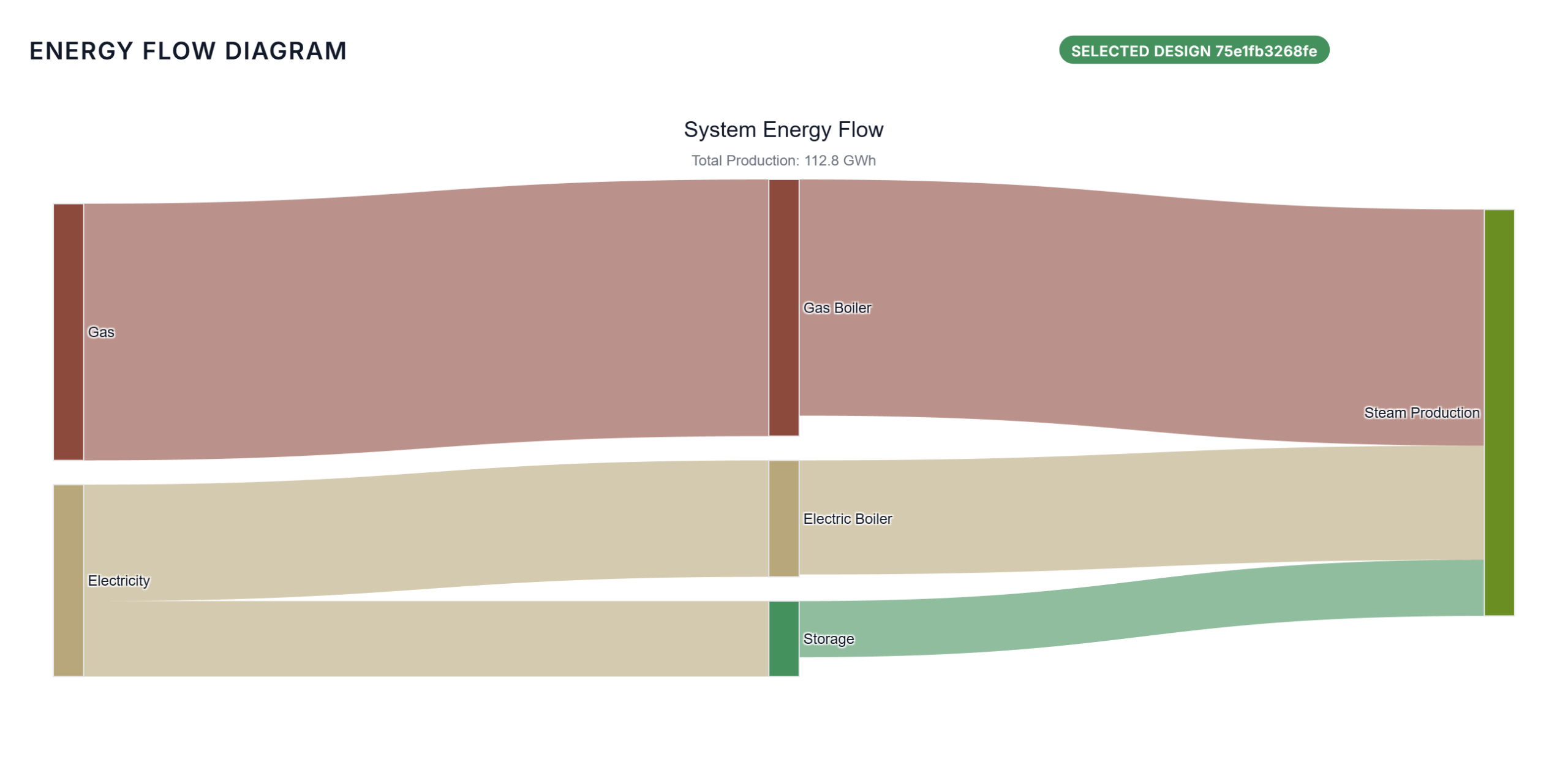
Using hourly optimization models, hybrid solutions combining gas, electric heating and thermal storage were assessed under real technical, market and regulatory constraints.
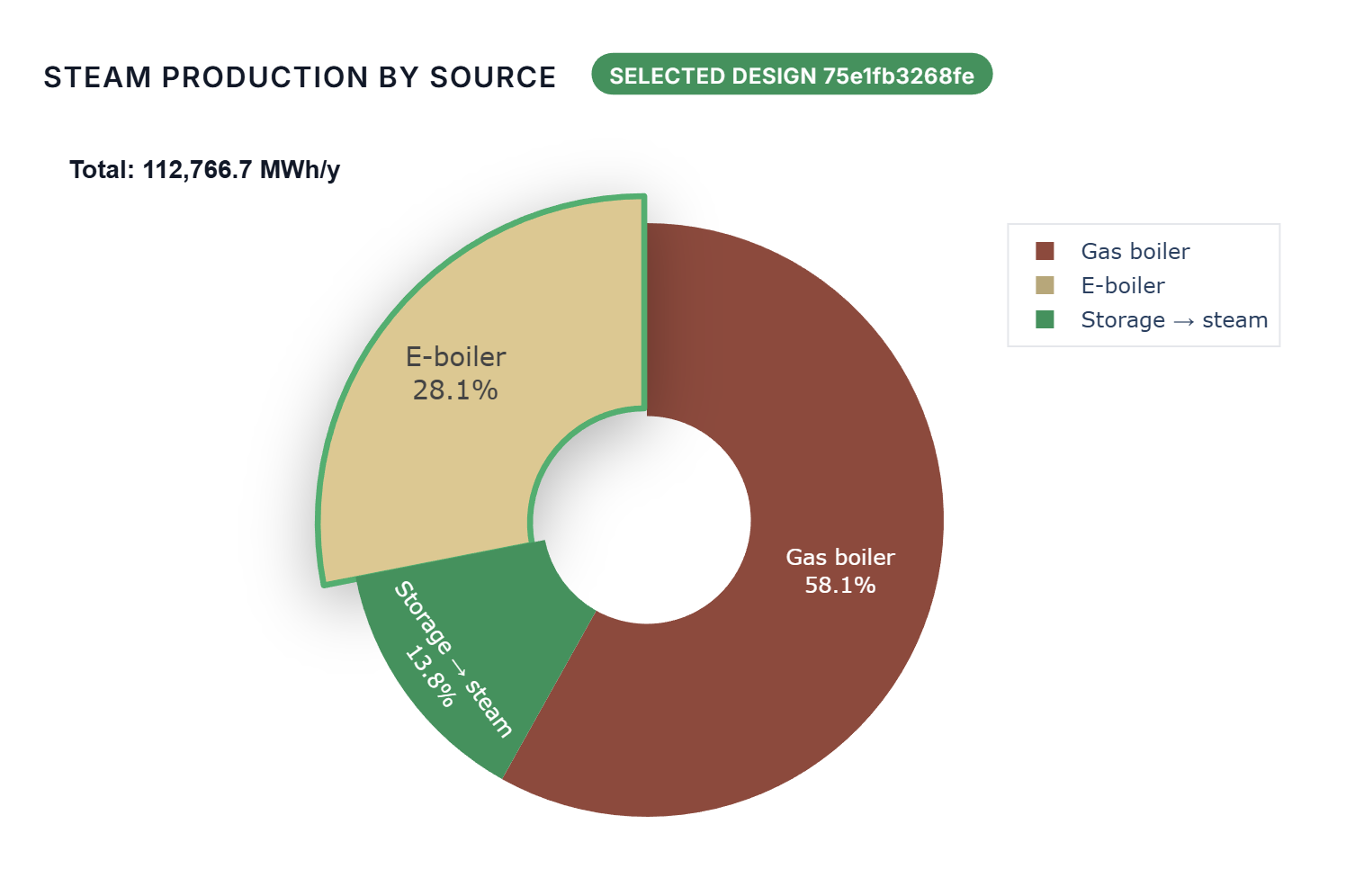
The selected configuration reduced CO₂ emissions by 18% (~4 ktCO₂/year) and operating costs by 12% (~€0.7 million/year).
The solution delivers competitive steam production costs, while ensuring full operational reliability.
Key Results
–18% CO₂
emissions
Levelized cost of steam in the range of ~40 €/MWh
–12% system
operating costs
100% hourly operational feasibility
Context & Challenge
The study was conducted for a large European pulp & paper site operating continuously and consuming over 300 GWh/year, where steam is a critical utility for production.
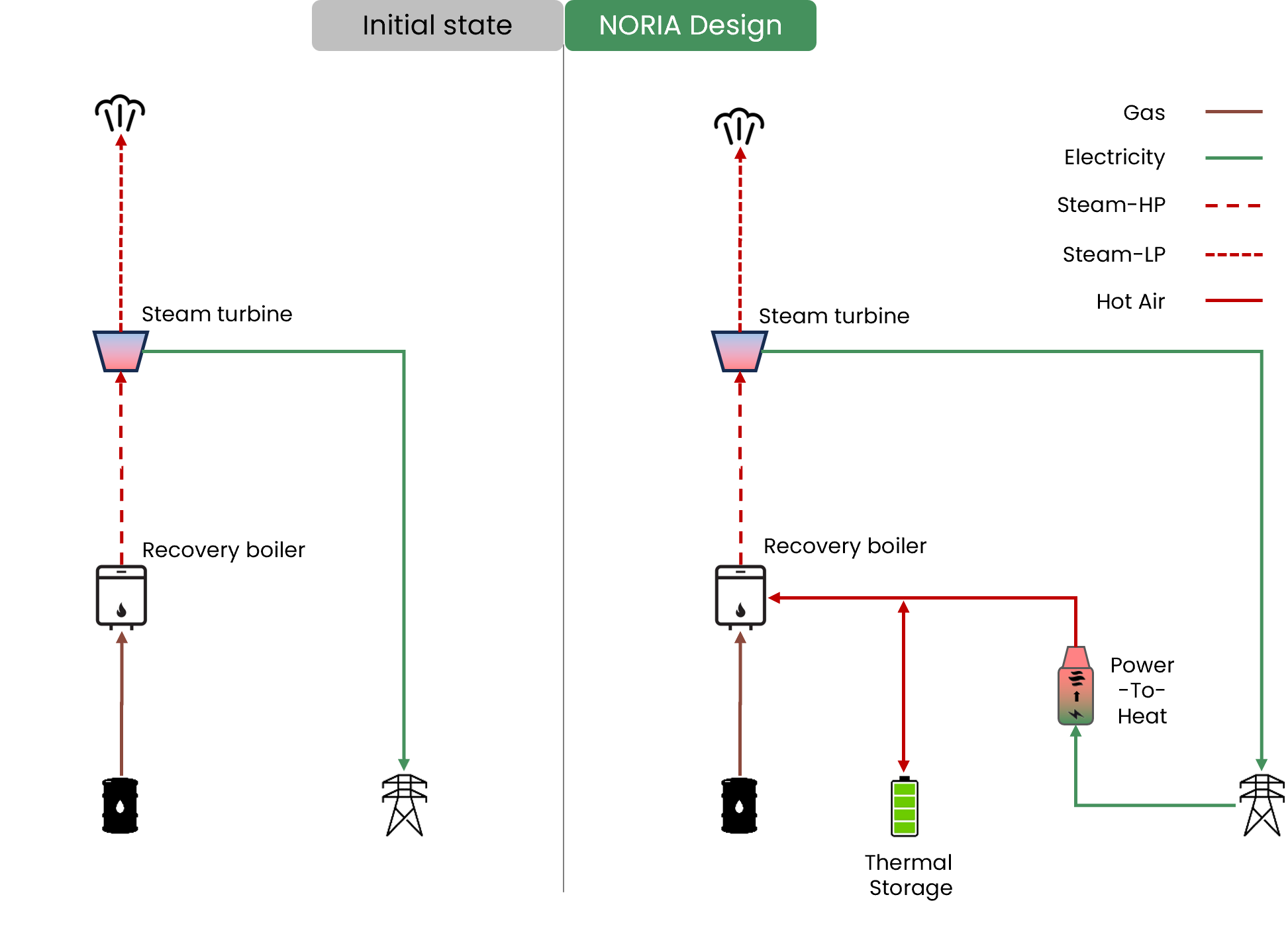
The site relies on a dual-pressure steam system coupled with on-site electricity generation through steam turbines, making steam decarbonization a system-level challenge rather than a simple boiler replacement.
Any viable solution had to preserve:
- 24/7 operation
- High- and low-pressure steam availability
- Electricity generation from turbines
- Full hourly feasibility under real constraints
NORIA System Approach
NORIA applied an hourly, system-level optimization framework to design and compare decarbonization pathways under real technical, market and regulatory conditions.
The model explicitly represents:
- steam flows and pressure levels
- turbine operation and electricity balances
- technology sizing under site constraints
- joint optimization of cost and CO₂
Three configurations were assessed on an hour-by-hour basis:
- gas-based reference system
- hybrid gas + electric heating
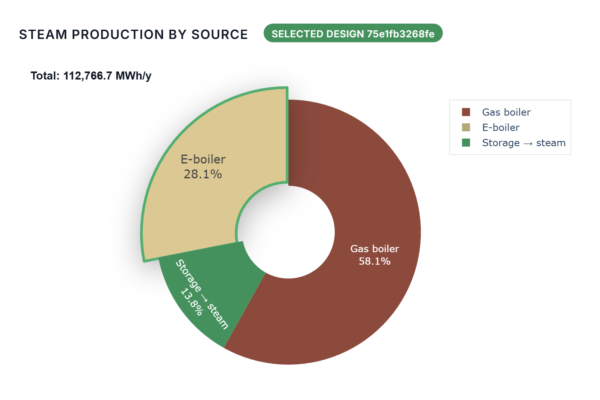
- hybrid gas + electric heating + thermal storage
Results & Decision Value
The selected hybrid configuration delivers measurable and robust benefits:
- –18% CO₂ emissions (~4 ktCO₂/year)
- –12% operating costs (~€0.7 million/year)
- Levelized cost of steam ~40 €/MWh
- 100% hourly operational feasibility
Robustness was validated against:
- real observed energy prices and future scenarios
- grid connection limits
- existing boiler and turbine constraints
- technology data validated with suppliers and an EPC
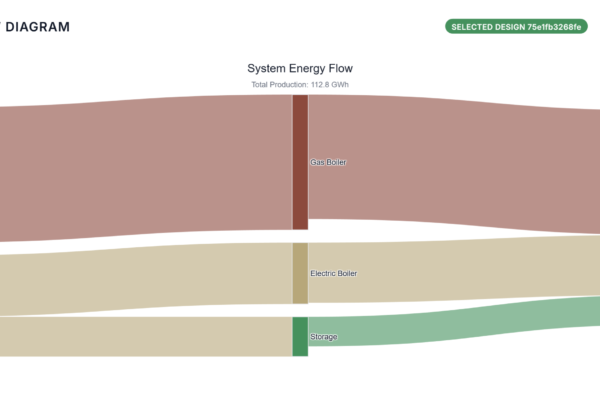
All scenarios are available in the NORIA decision dashboard, enabling executive KPI comparison, hourly dispatch validation, and exportable results for investment committees.
Key insight: hybrid systems consistently outperform mono-technology solutions, while thermal storage improves economics without compromising reliability.
Want to explore a similar case for your steam system?
CASE STUDY
High-temperature ceramics: Clean transformation of firing & drying processes
NORIA supported a global leader in ceramic manufacturing in designing a clean and cost-effective transformation of firing and drying processes at an energy-intensive industrial site.
The process operates 24/7, 50 weeks per year, combining high-temperature kilns and dryers operating around 150 °C, with partial waste heat recovery already in place.